
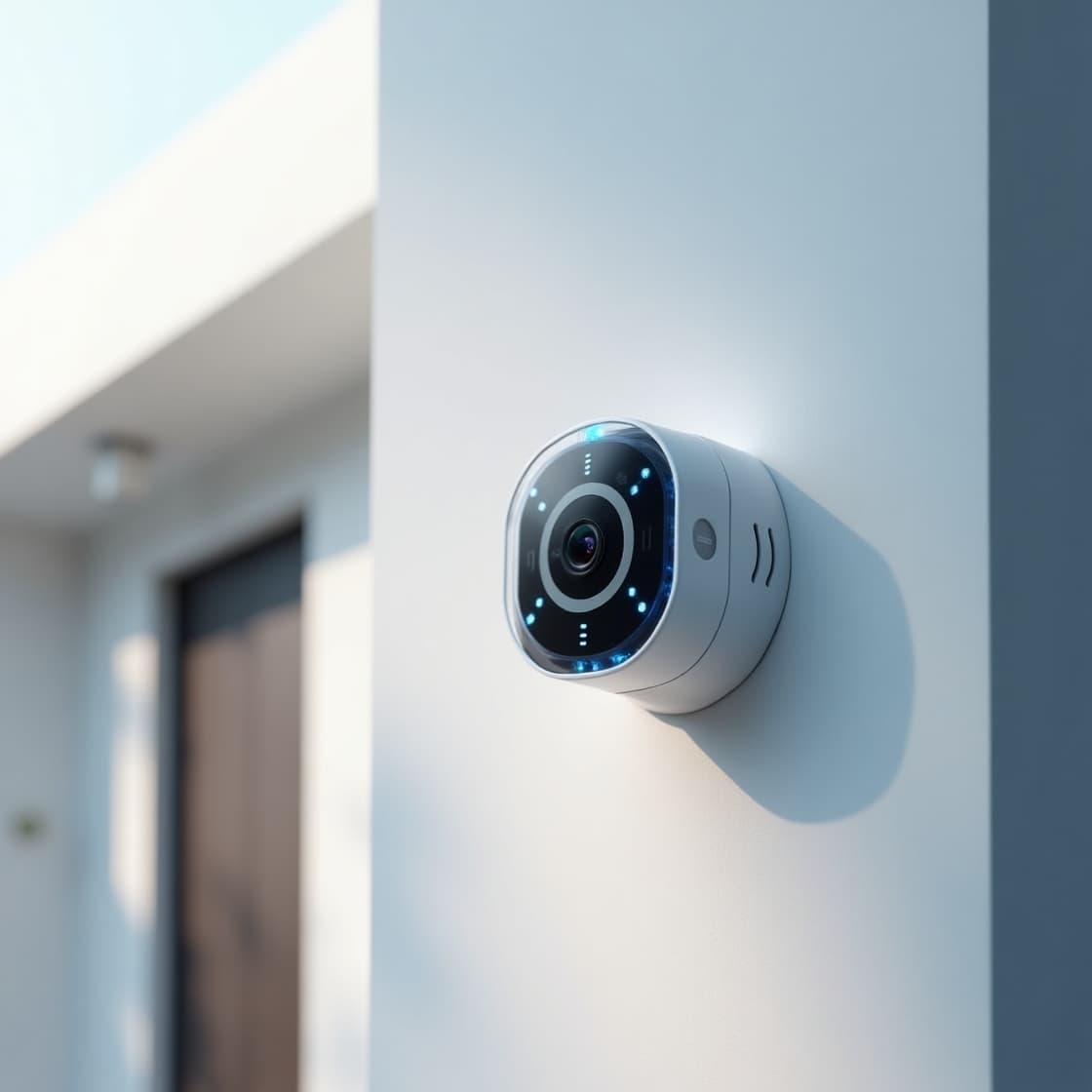
New CCTV Camera Technology in 2026: What's Changed and What's Worth Upgrading For
Camera resolution stopped being the main differentiator a few years ago — 4MP and 5MP have become the practical sweet spot for most commercial installs, balancing image quality with storage cost. The real progress in current-generation CCTV from our partner brands is happening in three other places: low-light performance, video compression, and on-device intelligence.
Low-light and color-at-night performance
Cameras like the Hanwha XNO-A8084R (5MP AI IR Bullet, 50m night vision range) and Honeywell's 50 Series dome cameras have made genuine gains in low-light color reproduction — useful for identifying clothing color or vehicle color at night, not just shapes. For perimeter security around warehouses and industrial sites in particular, this is one of the more meaningful upgrades over cameras from even three or four years ago.
H.265 / H.265+ compression as the new standard
Storage cost has historically been the biggest hidden expense in CCTV ownership. Newer cameras using H.265 and H.265+ compression — including our Hanwha QNO-6012R 2MP bullet cameras — can cut storage requirements by 50% or more compared to older H.264 systems at the same resolution and retention period. If you're still running an H.264-only system, this alone is often enough reason to consider an upgrade, since it directly reduces your NVR and storage costs going forward.
NVRs are getting smarter, not just bigger
Current NVRs like the Hanwha XRN-6410RB2 (64-channel) handle far more than recording — built-in analytics processing, RAID storage options for redundancy, and centralised health monitoring across multiple camera feeds. For larger commercial sites, this matters more than raw channel count: a 64-channel NVR that can run analytics across all of them is a different proposition from an older NVR that just records footage passively.
Panasonic i-Pro, Matrix, and Pelco: AI cameras beyond Hanwha and Honeywell
Hanwha and Honeywell get most of the attention, but Panasonic i-Pro and Matrix Comsec are shipping equally serious AI hardware, and Pelco rounds out our range for specialised and large-scale deployments. Panasonic i-Pro's WV-S15501-Z1L is a 5MP AI outdoor IR bullet camera with 10x motorized zoom — built for sites that need both wide coverage and the ability to zoom into detail without losing image quality, and it carries NDAA compliance, which matters for government and institutional clients like the metro and RBI-linked work we've done. Their WV-S1536LA, a 2MP AI-engine bullet camera, is specifically built for metro and airport-scale deployments, while the WV-S32302-F2L brings the same edge AI processing to a compact indoor dome for offices and retail.
Matrix Comsec's edge is less about a single flagship camera and more about how their systems scale. Cameras like the SATATYA CIDR20FL28CWP use a Sony STARVIS back-illuminated sensor with 120dB true WDR for genuinely better low-light and high-contrast performance, but the more interesting piece for larger sites is their NVR cascading feature — connecting up to 20 NVRs to centrally monitor 1,000+ cameras from a single interface, without needing a separate VMS server. For a business running multiple branches or a large campus, that's a meaningfully different cost and complexity profile than buying a traditional centralised VMS license.
Pelco doesn't yet have catalog listings with us the way Hanwha, Honeywell, Matrix, and Panasonic i-Pro do, but as a partner brand they're worth knowing about for two reasons: AI-based video analytics built for large, mission-critical deployments, and a track record in transportation and critical-infrastructure surveillance specifically — relevant if you're planning something closer to institutional scale than a single office or store. Ask us directly if you want a Pelco-based quote for a larger project.
Networking infrastructure matters as much as the camera
A camera is only as good as the network feeding it. We're seeing increasing demand for PoE+ switches and structured CAT6 cabling (from partners like D-Link, TP-Link, Netgear, CommScope and Airpro) specifically because newer AI-enabled cameras draw more power and bandwidth than older units. If you're upgrading cameras without reviewing your switches and cabling, you may not get the performance the new hardware is capable of.
So — is it worth upgrading?
If your current system is more than 5–6 years old, still on analog or early-generation IP, or running H.264 only, the combination of better low-light performance, lower storage costs from H.265+, and genuinely useful AI analytics usually justifies an upgrade within a few years through storage savings alone — separate from the security benefit. If your system is newer and already on H.265 with decent low-light cameras, a full replacement is rarely worth it; targeted additions (an AI-enabled camera at your main entrance, an LPR camera at the gate) often make more sense than a full swap.
Not sure which category your current setup falls into? Request a free system assessment and we'll give you a straight answer, not just a quote.
Need a security solution for your property?
Talk to our team for a free consultation tailored to your site in Mumbai.
Get a Free Consultation